How Sex Doll Materials, Structure, and Realism Work as a Single System
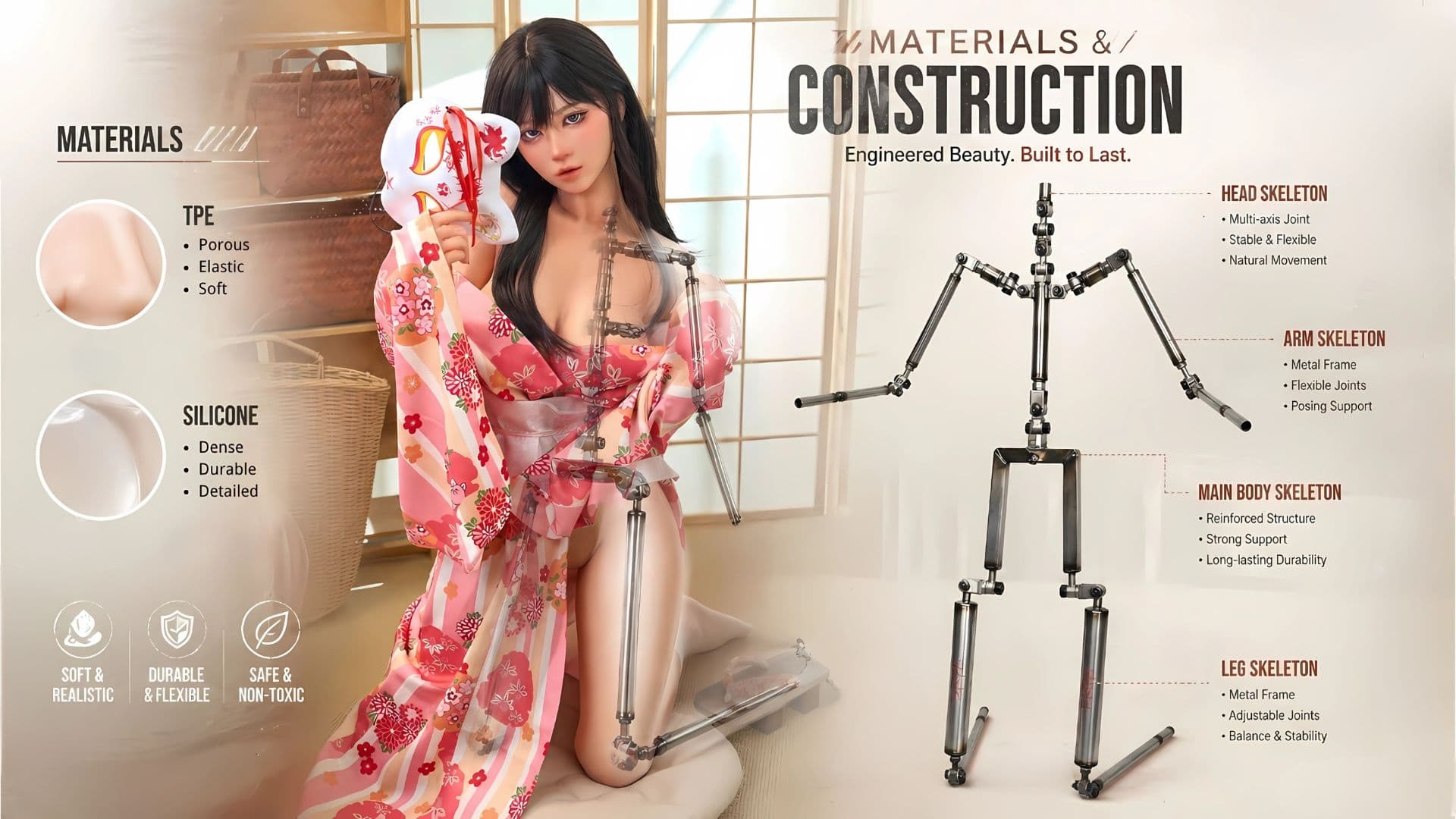
When people compare sex dolls, they usually focus on isolated factors such as material softness, structural flexibility, or how realistic the doll looks at first glance. But these elements do not exist independently. They function as parts of a single physical system.
A doll is not defined by one material or one feature. It is defined by how its materials determine structural behavior, and how that structure ultimately produces what users perceive as realism over time. This system-based relationship is what separates short-term impressions from long-term experience.
Materials such as silicone and TPE define the foundational physical properties of the doll, including density, elasticity, and surface response. The internal structure determines how movement, support, and articulation behave under repeated use. Realism, in turn, is not a standalone feature—it emerges from the interaction between material stability and structural mechanics over time.
Understanding this system is essential because the differences between dolls are not only visible at the point of purchase, but evolve through usage, maintenance, and time. This guide explains how each layer contributes to the overall experience, and how they work together to shape long-term satisfaction.
Material Foundation Layer: How Materials Define the System's Physical Boundaries
A doll’s material is not just what you touch. It is the physical foundation that sets the limits for everything the structure can do and everything the user will experience over time. Before discussing movement, realism, or maintenance, the material layer must be understood first—because it defines what is physically possible.
Silicone and TPE are often grouped together, but they belong to fundamentally different material systems. Their differences originate at the structural level, which directly determines how they behave under stress, repeated use, and long-term ownership conditions.

Silicone
Dense, stable, and structurally consistent material.
Silicone is a thermoset elastomer with a tightly packed molecular structure, resulting in a non-porous and highly stable material form. This density allows it to retain fine surface detail and maintain structural integrity over extended use.
It is chemically inert, odorless, and resistant to heat, oxidation, and environmental aging. Compared to more elastic materials, silicone offers lower stretchability but greater consistency in shape retention and long-term performance.
TPE
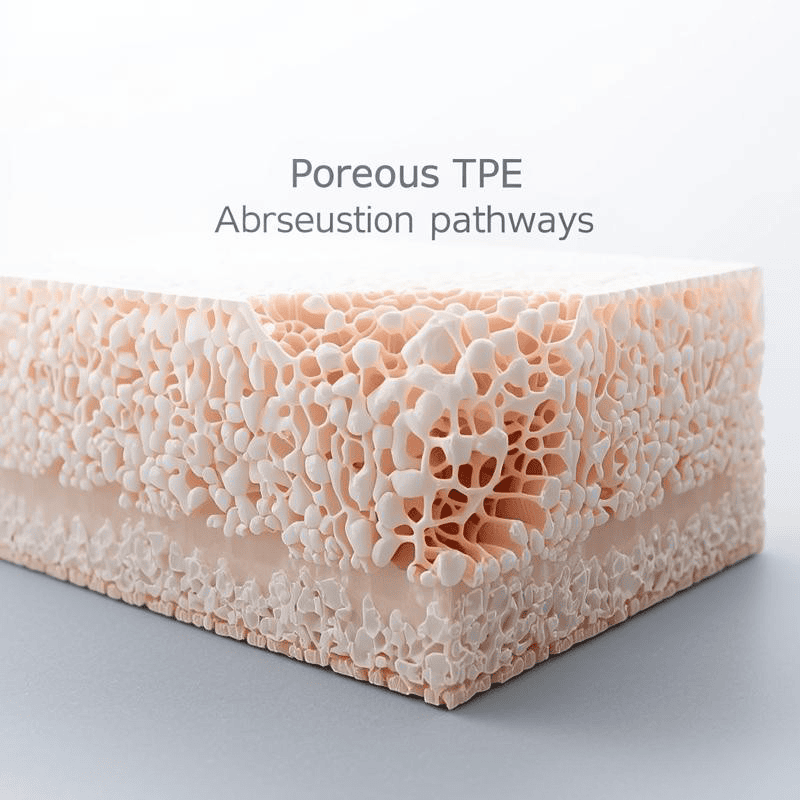
Porous, highly elastic, and composition-adjustable material.
TPE is a thermoplastic elastomer with a more open internal structure, resulting in a softer and more flexible material response. Its formulation can be adjusted to vary softness, elasticity, and density across different areas.
Compared to denser materials, TPE offers higher stretchability and compressibility, allowing for greater deformation under pressure. However, its porous nature makes it more susceptible to environmental factors, requiring more careful maintenance over time.
Surface Mechanics and Initial Interaction
Material differences are most clearly seen in how realistic the skin appears.
Silicone dolls display sharper details and more lifelike skin texture, with visible pores, fine lines, and clear surface definition. The material holds pigment on the surface, allowing details to remain crisp and visually striking.
TPE dolls, by comparison, appear less defined. Surface details are softer and less precise, as the material tends to absorb and diffuse pigment, making textures look more blurred and less realistic.
Surface quality is not an isolated aesthetic property. It is the first signal the material system sends to the user about its underlying nature. A sharp, stable surface signals a stable foundation. A soft, compliant surface signals a responsive foundation. Both signals are accurate. The question is which signal aligns with what the user expects from long-term ownership.
The comparisons below highlight how these differences appear across key areas.
Silicone Head VS TPE Head

Silicone Body VS TPE Body

Silicone Hand VS TPE Hand

Silicone Feet VS TPE Feet

Softness & Elasticity: How Each Doll Responds to Touch
Beyond surface feel, each material exhibits a distinct pattern of response to compression, deformation, and repeated loading. These behaviors become increasingly important as usage frequency increases.
Silicone and TPE differ significantly in terms of softness and tear resistance (Elasticity). Generally speaking, high elasticity implies greater tear resistance, whereas low elasticity means the material cannot withstand rough handling.
Silicone Doll: Firmer response with controlled deformation
Silicone dolls feel firmer, with higher resistance to pressure and less compression under touch. The material deforms less and returns more gradually, creating a more controlled and stable response.
Compared to TPE, traditional silicone has lower elasticity, making it prone to tearing under excessive external force. A new type of ultra-soft silicone enhances softness and flexibility; while maintaining structural stability and low maintenance requirements, it offers a more resilient tactile feel and improved tear resistance.
TPE Doll: Softer, more elastic, and higher tear resistance
TPE dolls compress more easily and rebound more quickly, creating a softer and more elastic touch. The material responds immediately to pressure, producing a more dynamic and yielding feel.
This high elasticity gives TPE a softer, more compliant feel, making it closer to real human skin while offering superior tear resistance—though the gap between the two has narrowed with the advent of new ultra-soft silicone materials.
Structure: The Internal System That Shapes Movement and Support
Beyond material, every companion doll is defined by its internal structure.
The system is divided into two main parts: the head and the body. While the head contains limited mechanical elements, the body relies on an internal skeleton that determines how the doll moves, holds posture, and distributes weight.
Body structure can be further understood through three key areas—torso, hands, and feet—each designed with different joint systems and levels of articulation. From standard frameworks to more advanced designs, these structural variations shape how natural, stable, and controllable the doll feels in use.
The sections below present these systems visually, allowing you to understand how each part is built and how it contributes to overall movement and support.
Head Structure: Limited Systems with Focused Functional Detail
Compared to the body, head structure is more limited in mechanical design.
Most structural variation comes from a few key elements—hair integration, oral articulation, and eye movement. These features shape how natural the head appears and how much interaction it allows, rather than affecting overall movement.
Rooted hair and Realistic Oral Structure (ROS), which allows jaw movement and internal articulation, are typically found in silicone dolls, where the material supports more precise integration. Movable eyelids add a simple but noticeable layer of visual variation across both material types.
The following sections highlight these elements individually, focusing on what they add to appearance and interaction.
Realistic Oral Structure (ROS)
A structured internal mouth system with a movable jaw, designed to more closely reflect the proportions and mechanics of a real human mouth.
Instead of a simple opening, the mouth becomes a coordinated structure—where the jaw, lips, and internal components move together, making the head feel less static and more physically responsive.
Movable Eyelids
An adjustable eyelid system that allows the eyes to open wider or narrow at an angle.
By simply changing the position of the upper and lower eyelids, the face can appear more focused, relaxed, or expressive—creating a subtle sense of movement without any complex mechanism.
Body Structure: The Core System of Movement and Support
Most of a doll’s movement and physical control comes from its body structure.
An internal skeleton runs through the torso and extends into the hands and feet, forming a connected system that supports posing, balance, and positioning.
Different designs affect how easily the body can be adjusted, how stable it feels once positioned, and how precise smaller movements can be.
The following sections focus on these areas individually, showing how each part contributes to overall control and usability.
EVO Skeleton: A More Refined System of Movement
The EVO skeleton represents a shift from basic internal support to a more refined movement system.
Instead of simply holding poses, the structure is designed to distribute joints and support more naturally across the body. This allows smoother transitions between positions and reduces the sense of stiffness found in earlier designs.
As an evolved framework, it improves how movement flows through the body, making posture adjustment feel more controlled and less mechanical.
Hand Skeleton: From Fixed Form to Articulated Control
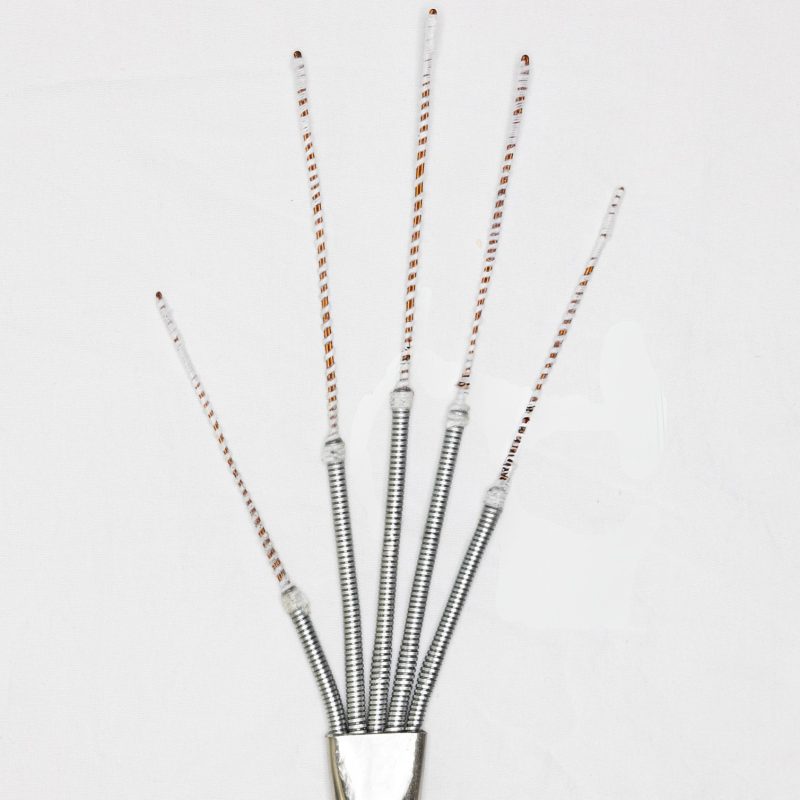
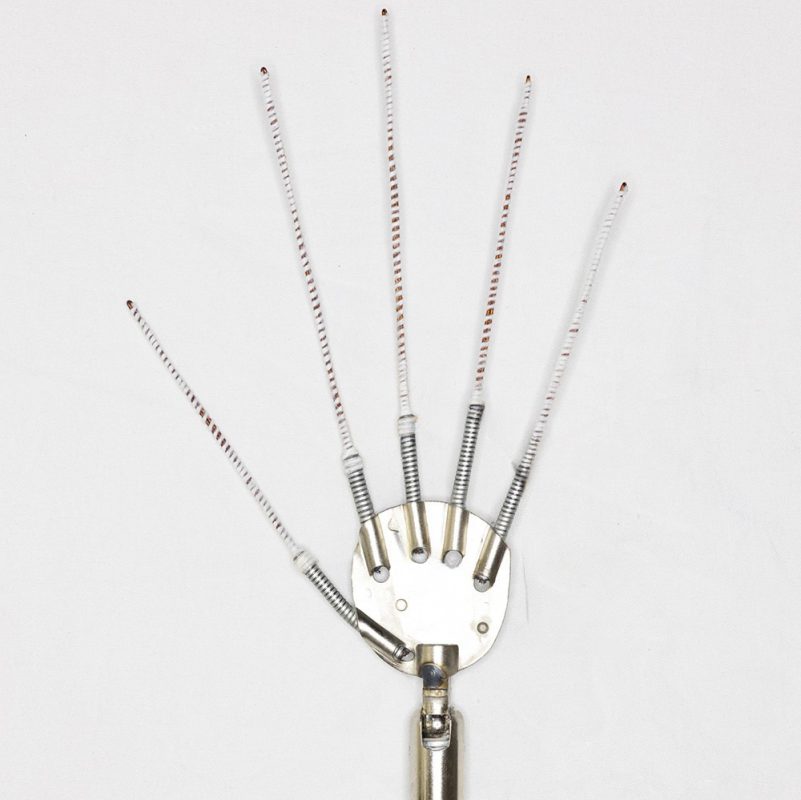
Hand structure has evolved from simple internal wires to more articulated systems that allow controlled finger positioning.
Early designs could bend, but lacked stability and precision. Newer articulated structures introduce defined joint points, allowing each finger to hold its position more reliably.
This progression transforms the hand from a flexible but inconsistent form into a more controllable and expressive part of the body.
Wire Fingers
Wire Fingers with Palm & Wrist Joint

Regular Articulated Fingers

Ball-Jointed Articulated Fingers
Toe Structure: A Minor Structural Variation
Toe structure remains a simplified part of the overall system.
Some designs include basic wire support, others introduce articulated joints, while some omit internal structure entirely.
These differences have minimal impact on overall use, but may slightly influence how the feet maintain shape in certain positions.
Realism as Emergent Property: How the System Produces Perceived Experience
Realism is frequently discussed as if it were a feature that can be added to a doll—better material, more detailed sculpting, additional mechanical functions. This framing misrepresents how realism actually works.
Realism is not a property of any single component. It emerges from the interaction between material behavior, structural mechanics, and user perception over time.
System Coordination: Why Realism Cannot Be Isolated
A doll does not feel real because its silicone is high-quality or because its skeleton has many joints. It feels real when the material and structure coordinate well enough that the user stops noticing individual components and perceives a unified presence instead.
This coordination can be observed in specific mechanical interactions. When a user raises the doll’s arm, the shoulder joint initiates movement. The surrounding material stretches to accommodate the new position. The torso shifts slightly to redistribute weight. If all three responses occur smoothly and in sequence, the movement registers as natural. The user does not think about joints or material properties. They perceive a body moving.
If any part of this sequence fails—a joint that catches, material that bunches unevenly, weight shift that feels abrupt—the coordination breaks. The user stops perceiving a body and starts perceiving a mechanism. Realism collapses not because any single component is defective, but because the system stopped working as a unified whole.
This is why specifications alone cannot predict realistic experience. A doll with excellent material and an advanced skeleton can still feel mechanical if the two layers are not tuned to work together. A simpler doll with well-integrated components can feel more coherent than a complex one with poorly matched layers.
Three Layers of Realism: Physical, Interactive, Perceptual
Physical realism
Physical realism is the foundational layer. It depends on whether the material-structure system produces behavior that reads as bodily rather than mechanical. Does the surface compress like tissue or like plastic? Do joints move through arcs that feel anatomically plausible? Does the body maintain continuity across different positions, or do gaps and seams interrupt the form?
Physical realism is the most directly engineered layer. It is a product of material selection, skeleton design, and manufacturing precision. When executed well, the body behaves as a connected whole. When executed poorly, the body reads as an assembly of separate parts.

Interactive realism
Interactive realism is the behavioral layer. It depends on whether the system responds to user actions in ways that feel temporally and mechanically appropriate. A limb that moves when pushed, stops when released, and holds its new position without drift creates interactive continuity. A heating element that warms gradually and maintains temperature reads as a physiological response rather than a mechanical function.
Interactive realism is not about the number of features a doll includes. A doll with few features that respond consistently can feel more real than one with many features that respond unpredictably. The brain is sensitive to timing mismatches and mechanical inconsistency. A single delayed or unnatural response can break immersion that took minutes to build.
Perceptual realism
Perceptual realism is the cognitive layer. It depends not on the doll itself, but on how the user’s mind interprets the combined output of the physical and interactive layers. When physical behavior feels continuous and interactive response feels timely, the brain begins to process the experience differently. Small details—the angle of a tilted head, the position of resting hands, the way the body settles into furniture—are interpreted as intentional rather than mechanical.
This is the layer where emotional attachment can develop. Not because the user believes the doll is alive, but because the interaction has become structured enough for the mind to apply patterns it normally reserves for companion relationships. The shift is subtle. It moves from “using something” to “being with something.”

What Our Dolls Can Do

Standing
Standing feels real when the body remains stable without forced support.
A well-balanced structure allows the doll to stand in a way that feels grounded, rather than posed. The posture holds naturally, without tension or collapse.

Sitting
Sitting feels natural when the body adapts to real environments.
Whether on a chair, sofa, or bed, the posture adjusts in a way that looks and feels consistent with how a human body would rest.

Hand Poseture
Hand poseture feels realistic when fingers can form natural, controlled gestures.
Subtle movements — such as relaxed fingers, slight bends, or gentle contact — play a critical role in how the body is perceived. When hands appear stiff or unnatural, the overall realism is quickly reduced.

Lying Down
Lying positions feel realistic when the body maintains continuity across the full form.
There are no awkward gaps or unnatural angles — the body remains connected, allowing interaction to feel smooth and uninterrupted.

Kneeling
Kneeling feels real when the body maintains balance and alignment under pressure.
The position should hold without instability, allowing the posture to feel grounded and physically coherent rather than fragile or forced.

Leaning
Leaning feels believable when the body can distribute weight naturally against surfaces.
Whether against a wall, headboard, or furniture, the posture should appear relaxed and supported, rather than stiff or artificially placed.

Squatting
Squatting feels natural when the body can compress while maintaining balance and proportion.
A realistic squat requires coordinated joint movement and structural support, allowing the posture to look stable rather than strained or unnatural.

All-Fours Position
All-fours positioning feels realistic when the body remains stable and aligned across multiple contact points.
Weight is distributed through the arms and knees, allowing the posture to appear supported and continuous rather than collapsed or artificial.
View Realistic Dolls by Brand
Real Lady Doll — Ultra-Realistic Premium Silicone Dolls
Real Lady Doll represents the highest level of silicone craftsmanship, focusing on extreme surface realism, refined anatomical sculpting, and detailed skin expression.
Each model is designed with precision silicone construction to achieve a highly lifelike appearance and tactile depth. This brand sits firmly in the premium segment for users who prioritize maximum realism over cost considerations.
FunWest Doll — High-Value Realistic Silicone & TPE Dolls
FunWest Doll focuses on balancing realism and affordability, offering both silicone and TPE models with strong visual performance and flexible customization.
With a large selection of head sculpts and body types, the brand is known for delivering accessible realism through its STPE and silicone lines, making it a strong choice for value-oriented users.
Irontech Doll — Versatile Realistic Dolls with Broad Customization
Irontech Doll provides a wide range of silicone and TPE companion dolls, emphasizing diversity in body types, configurations, and design options.
Rather than focusing on a single material or niche, the brand offers balanced craftsmanship across a broad product line, making it suitable for users who value variety and flexibility in selection.
Top Fire Doll — Entry-Level Realistic Silicone Dolls
Top Fire Doll focuses on entry-level silicone dolls, offering an accessible option for users entering the realistic doll category.
While detailing and sculpt refinement are more simplified compared to premium brands, the core advantages of silicone—durability, structure stability, and material consistency—are preserved, making it a practical choice for budget-conscious users.
Functional Components: Extensions Beyond Core Structure
Functional components are optional configurations that can be added on top of the core material and skeleton system.
They introduce localized movement or pressure-based interaction in specific areas, extending how the doll can be experienced without changing its overall structure.
Options, design, and performance vary between brands.
To explore available configurations, please visit the Brand Overview page.
Further Exploration: System Extensions
This page has focused on how materials, structure, and realism function as an integrated system. Specific topics that extend from this foundation are explored in greater detail across the following resources.
This section connects material behavior directly to ownership reality, focusing on how silicone and TPE differ in maintenance effort, stability, and long-term cost.
- Why different materials require different cleaning and care routines
- How surface behavior affects maintenance frequency and intensity
- Why TPE typically requires more ongoing attention to surface condition
- How silicone’s stability reduces long-term maintenance variability
- How storage, cleaning, and handling influence material lifespan
- Why maintenance effort is a direct extension of material structure
Related articles:
Structure is a system built across different parts of the body. To understand it more clearly, consider it from three practical areas: the head, the body, and additional functional systems.
Head Structure: Movement, Expression, and Facial Systems
- What Is a ROS Head?
- Why Do ROS Heads Feel More Real?
- Is a ROS Head Worth It?
- Hard Silicone Head vs. Soft Silicone Head
- Hair Implantation
- From Material to Expression: The Craft Behind a Companion Doll’s Face
Body Structure: Skeleton, Support, and Full-Body Movement
- EVO Skeleton: How Structural Design Reflects Evolution
- Ball Jointed Hand Skeleton
- Hands and Feet Explained
- What Is Articulated Fingers?
- The Complete Manufacturing Process of a Sex doll
- Why Removable Designs Don’t Always Feel More Real
- How to Use a Companion Doll (positions & movement understanding)
- How to Install a Doll Head with M16 Connectors
Integrated Functional Systems: When Features Interact with Structure
Realism is not a single factor, but a system made up of multiple layers. Each part can be explored further:
Frequently Asked Questions
Understand key differences in materials, internal structure, and realism across silicone and TPE sex dolls, including skeleton systems and articulated components.
1. What is the difference between silicone and TPE sex dolls?
Silicone is firmer, more durable, and holds fine details better, while TPE is softer, more flexible, and often feels closer to human skin. (Note that some current brands offer ultra-soft silicone for their dolls as an option.) Both materials affect realism differently depending on use preference.
2. Which material feels more realistic, silicone or TPE?
TPE generally feels softer and more skin-like in compression, while silicone offers more defined structure and surface detail. Realism depends on whether you prioritize softness or anatomical precision.
3. What is an EVO skeleton in a sex doll?
The EVO skeleton is an internal articulated structure designed to improve pose stability and movement realism, allowing more natural positioning of limbs and joints compared to basic frameworks. Click to see more about EVO Skeleton.
4. Do finger and toe joints really move?
Yes. Advanced dolls include articulated finger and toe bones, allowing partial movement and improved pose realism, especially for hand positioning and aesthetic detailing. Want to know more about the doll’s hand and feet? Please refer to the explanation of hands and feet.
5. What is the ROS head system?
ROS stands for Realistic Oral Structure — a design concept focused on making the internal mouth area of a doll head closer to human oral anatomy, including teeth, tongue, and jaw proportions. View our article What Is a ROS Head? Understanding Realistic Oral Structure as an Evolving Design Concept for more details about ROS head.
6. How is a ROS head different from a basic silicone head?
A basic silicone head may have a simple mouth opening, but a ROS head intentionally structures the lips, jaw, teeth, and tongue to reflect real human oral relationships and allow more natural jaw movement.
7. What does ROS MAX mean?
ROS MAX is not a different category but a refined version of ROS that improves on the original design with better proportions, jaw mechanics, lip positioning, and internal structure stability.
8. What’s the difference between a hard silicone head, a soft silicone head, and a ROS head?
A hard silicone head focuses on sharp facial details, stable makeup, and durability, and it can support implanted hair. Its oral channel is typically non-functional.
A soft silicone head uses more flexible silicone, allowing a usable oral channel and a more skin-like feel, but it is generally not recommended for hair implantation.
When a soft silicone head is engineered with a realistic internal mouth structure—such as defined lips, teeth, tongue, and jaw mechanics—it is referred to as a ROS (Realistic Oral Structure) head, representing a more anatomically developed soft head design. The article Hard Silicone Head vs. Soft Silicone Head: Which Doll Head is Right for You? has a very detailed explanation about hard head and soft head.
9. Which type of doll lasts longer, silicone or TPE?
Silicone generally has higher durability and resistance to staining, while TPE requires more careful maintenance but remains flexible over time. Click to view the lifespan of silicone and TPE dolls.
10. Does skeleton design affect realism?
Yes. Internal skeleton structure directly affects posture stability, movement range, and how naturally the doll can be positioned in real-life scenarios.