
Companion Doll Hands and Feet Explained: Skeleton Design, Materials, and Standing Options
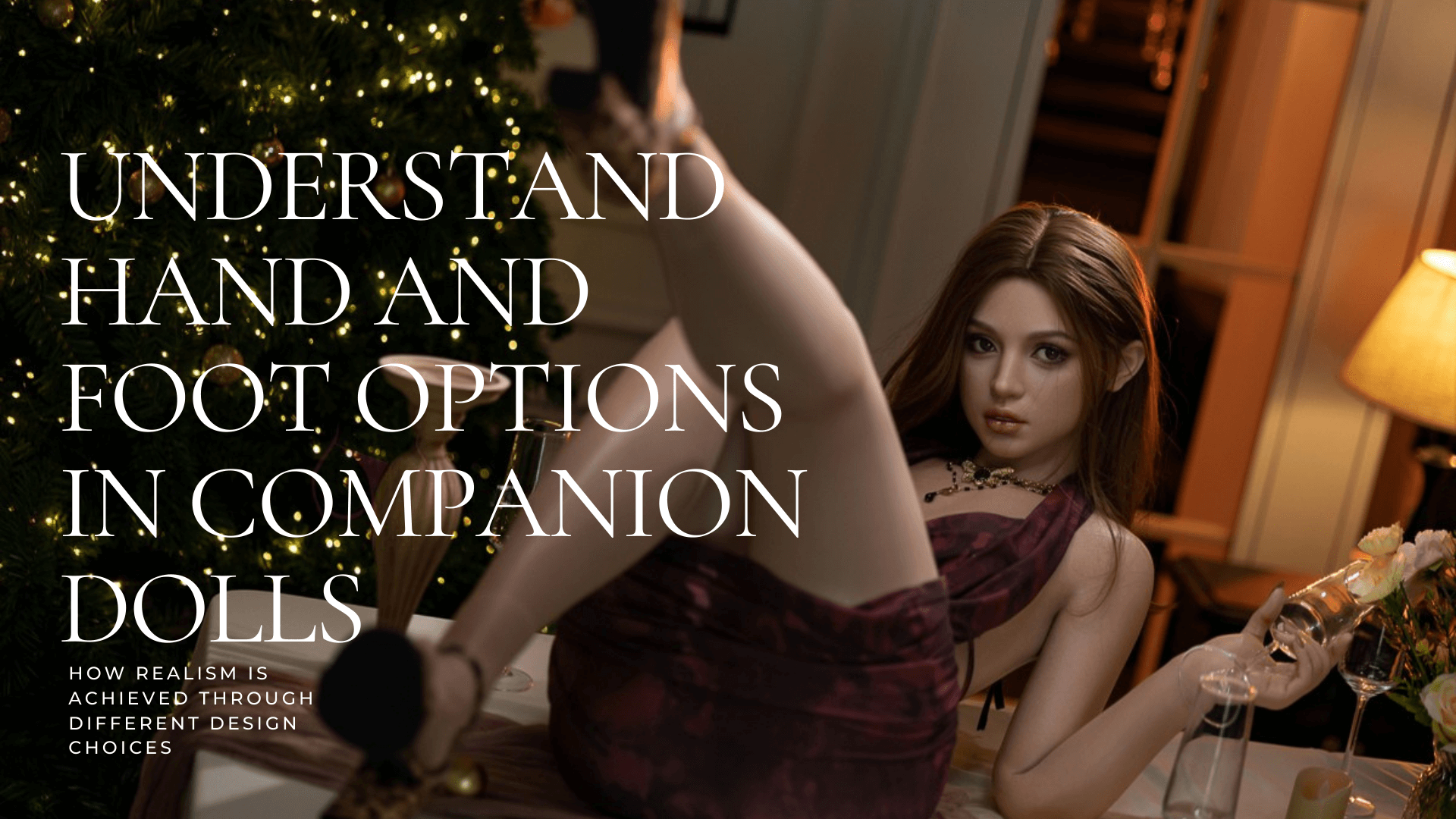
When customizing a companion doll, hands and feet are often treated as secondary details.
In reality, they play a central role in how natural the doll looks, how it can be posed, and how it interacts with everyday use scenarios.
This guide is not intended to rank options as “better” or “worse.”
Its purpose is to clearly explain what each hand and foot option actually means, how it functions, and what limitations it carries—so choices are made with accurate expectations rather than assumptions.
Part I: Hands — Finger Skeletons and Hard Hand Materials
Hands are among the most visually noticeable and frequently touched parts of a companion doll.
They directly influence:
- Whether fingers rest naturally
- How stable and expressive hand poses can be
- The tactile feedback when holding or pressing the hand
Most misunderstandings about hand options come from a single issue: confusing internal finger skeletons with external hand materials.
These are two separate configuration dimensions and should be understood independently.
1. Finger Skeleton Types (Internal Structure)
1.1 Wired Fingers
Definition:
- Each finger contains a flexible metal wire
- Fingers can be manually shaped into basic poses
- Best suited for relaxed, natural hand positions
Characteristics:
- Simple bending logic
- Shape depends on manual adjustment
- Limited precision for detailed gestures
1.2 Articulated Fingers
Definition:
- Articulated fingers are designed to simulate real human finger joints.
- Each finger is built with segmented joints
- Bending follows anatomical movement patterns
- Fingers settle more naturally when relaxed
Characteristics:
- More natural finger motion
- Improved pose stability
- Better suited for users who value hand realism
1.3 Ultra-Flex Fingers (Advanced Articulated Fingers)
Definition:
Ultra-Flex Fingers represent an extended form of articulated finger design. In addition to jointed structure, the fingers allow controlled backward bending, enabling subtle expressive gestures commonly seen in human hands (often referred to as “orchid finger” poses).
Key features:
- Fully articulated joints
- Limited, controlled backward flexion
- Higher expressive range for hand posing
Use cases:
- Expressive hand gestures
- Detailed posing and close-up photography
2. What Is a Hard Hand?
2.1 Definition of Hard Hand
Unlike finger skeletons, Hard Hand refers to a material choice, not a skeleton type. Hard Hand typically uses hard silicone in the hand area to simulate the firmness and bone structure of a real human hand.
- Clear, firm feedback when pressed
- Reduced surface collapse
- More defined bone and joint contours
2.2 How Hard Hand Changes the Experience
- Touch feels more bone-like rather than soft
- Hand shape remains more stable during posing
- Structural details are easier to perceive
2.3 Understanding the Trade-off
- Emphasis is on structure and realism rather than softness
- The tactile experience is firmer by design
Part II: Feet — Skeleton Structure, Materials, and Standing Capability
Foot construction consists of two separate internal systems, each serving a different purpose:
Foot sole structure — determines weight-bearing and standing ability
Toe structure — determines whether toes exist and whether they can move
Standing capability is related to sole structure and material, not toe configuration.
1. Standing Capability: Three Foot Options Explained
1.1 No Standing Feet
Definition:
- Basic foot sole structure
- No weight-bearing capability
- Foot material matches the body material
Characteristics:
- Most natural visual appearance
- No visible hardware
- Not designed for standing
Recommended for:
- Lying or seated use
- Users who do not require standing poses
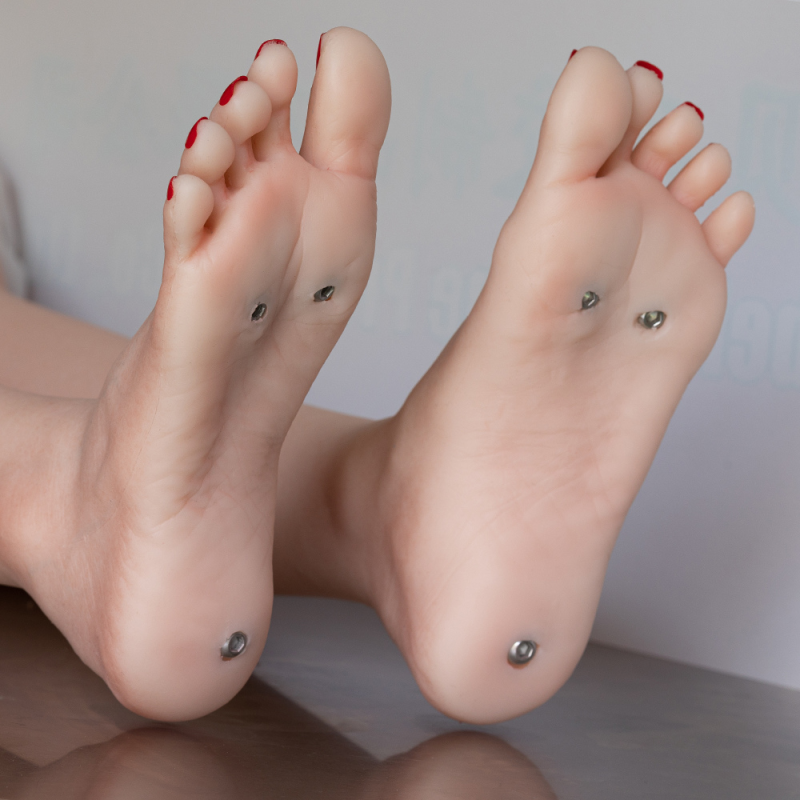
1.2 Standing Feet (With Bolts)
Definition:
- Reinforced internal foot sole structure
- Internal standing bolts integrated into the skeleton
- Designed to support full body weight
The bolts connect the internal skeleton directly to the ground, allowing the doll to stand stably for extended periods.
Characteristics:
- Reliable and stable standing
- Clear functional purpose
Considerations:
- Bolts may be visible on the soles
- Aesthetic trade-off in exchange for stability
1.3 Standing Feet Without Bolts (Hard Feet)
Definition:
- Internal sole structure similar to No Standing Feet
- No bolts
- Standing capability achieved through hard silicone foot material
This configuration relies on material stiffness rather than structural reinforcement. If standing is a functional requirement rather than an occasional visual pose, Standing Feet with bolts should be chosen.
Usage limitations:
- Not suitable for long-term standing
- Excessive weight or duration increases risk of internal damage
Best suited for:
- Short, assisted standing poses
- Users prioritizing sole appearance over standing duration
2. Toe Structure Options
2.1 No Toe Structure (No Toe Joints)
- Foot is a single, unified shape
- No individual toes are present
- Clean, simplified appearance
2.2 Wired Toes
- Individual toes are present
- Each toe contains a flexible wire
- Allows basic toe bending
2.3 Articulated Toes
- Toes are built with jointed structures
- Allows natural toe curl and separation
- Highest level of foot pose realism
How to Interpret These Options
These configurations are not about hierarchy or superiority. They reflect different priorities and usage expectations:
- Hands focus on expression, gesture, and tactile realism
- Feet focus on support, stability, and display scenarios
Understanding what each option is designed to do—and not do—is far more important than selecting the most complex configuration.
Conclusion: Choosing with Clear Expectations
Hands and feet are not cosmetic details. They define how a companion doll interacts with posture, space, and touch.
When these options are misunderstood, disappointment usually follows—not because the product failed, but because expectations were misaligned with physical reality.
A doll designed for expressive hand gestures is not automatically designed for long-term standing. A foot designed for visual realism may not be intended to carry full body weight. These are not flaws. they are design choices with specific purposes.
By understanding hand skeletons, materials, foot structures, and standing mechanisms as functional systems rather than labels, customers can make decisions that align with how the doll will actually be used—whether for posing, display, companionship, or everyday interaction.
Clear understanding leads to better choices, longer product life, and a more satisfying companion experience overall. We highly recommend you can visit the pillar page Materials & Construction to learn how sex doll materials, structure, and realism work as a single system before making your final decision.

BreathyDoll Team
Entity: BreathyDoll
Date : February 4, 2026
