
What Is the Structure of a Sex Doll? How Structure Shapes Realism
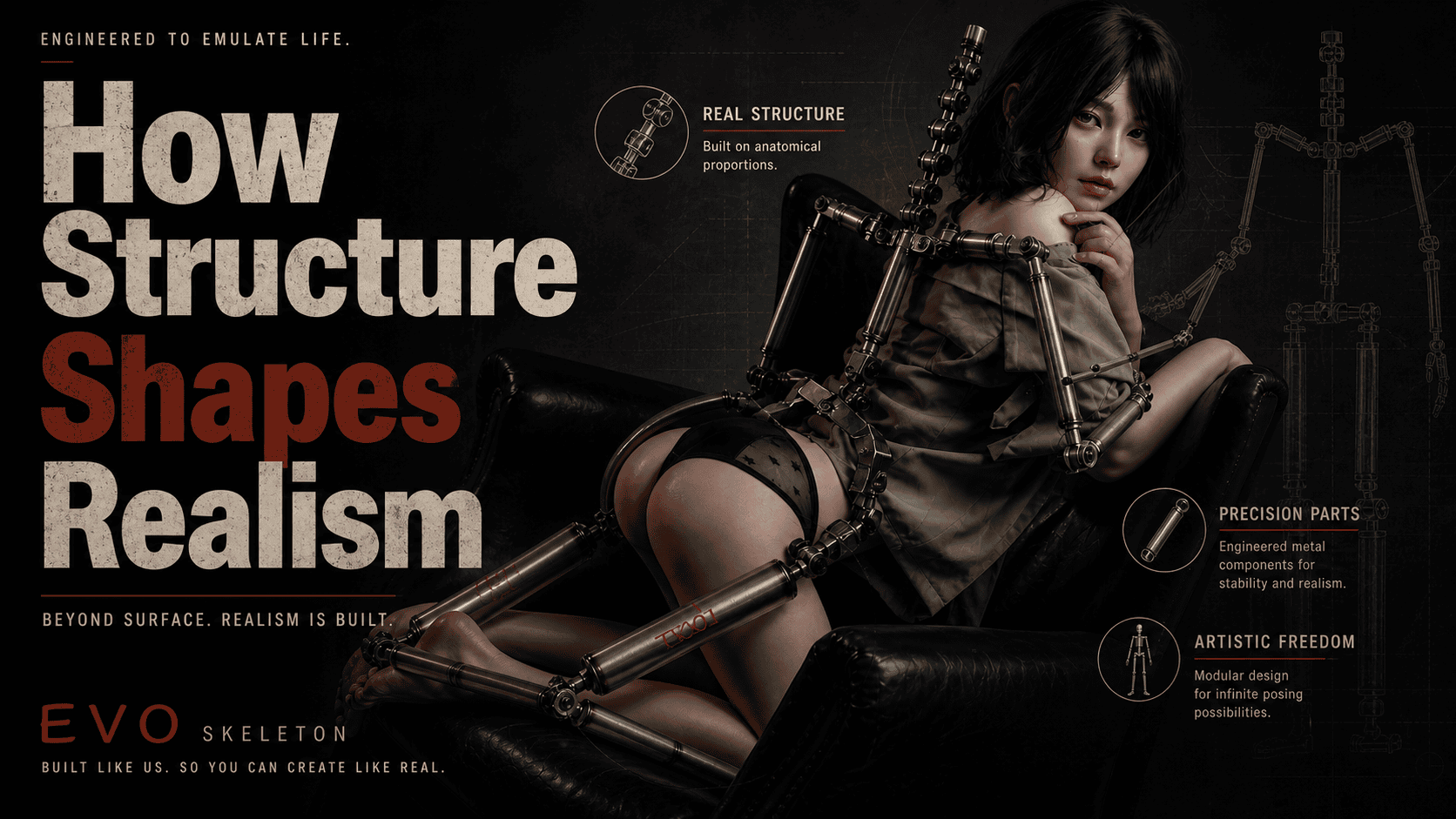
1. What Is the Structure of a Sex Doll?
A sex doll is built from two main parts: the head and the body. Each part contains both internal systems and external layers, and together they determine how the doll looks, moves, and behaves over time.
The structure of a sex doll can be broken down into the following system:
- Head and body: These define the two primary functional areas.
- Internal systems: Provide support and movement.
- External layers: Shape appearance and surface interaction.
From the inside out, a typical build includes a metal skeleton and joint system, localized mechanical components where needed, a cushioning layer that reduces pressure from the frame, and an outer silicone or TPE layer that defines form and texture. Surface elements such as eyes, hair implantation, and finishing complete the visible result.
These layers are not independent. They are assembled and adjusted as a single system. Movement in one area affects another—for example, raising an arm shifts load across the torso, and head position can influence overall balance. The coordination between these layers is crucial to maintaining realism in the doll’s interaction and behavior over time.
TPE doll showcase from Irontech
2. Why Is Structure More Than Just a Skeleton?
Structure is often reduced to the internal skeleton, but this only explains part of how a doll behaves. The full structure consists of three connected layers working together:
- The internal framework: Enables movement and bears load.
- The external material: Defines shape and surface response.
- The connection between them: Determines how force is transferred and how the body reacts.
What matters is not just the presence of these elements, but how well they are coordinated. A skeleton can allow movement, but without the right support from the surrounding material, that movement can feel unstable. A soft exterior may feel realistic at first touch, but without internal support, it cannot maintain that impression during repeated use.
This is why two dolls with similar materials or similar skeleton types can feel completely different. The difference lies in how the components work together as a stable system, not in any individual feature.
3. Internal Head Structure: Precision Movement in Small Systems
The internal structure of the head is designed for small, controlled movements that influence close-range interaction. Unlike the body, which handles larger movements and weight distribution, the head operates in a confined space where precision is paramount. Two common systems define this area:
- Oral structure: ROS is currently considered the most popular and advanced oral structure. This system uses a movable jaw mechanism that controls mouth opening, pressure distribution, and supports internal elements like teeth and tongue.
- Eyelid mechanisms: These allow subtle changes in expression and require careful alignment to ensure smooth, consistent movement.
The key factor is not whether movement exists, but how well it is controlled. If the internal structure can guide motion consistently, the experience feels stable. If not, additional features tend to reveal mechanical limits rather than enhance the experience.
Because the head operates in such a small space, even minor inconsistencies can become noticeable. This makes it a precision system, where the accuracy of movement is more important than the range of motion.
ROS head showcase
4. Internal Body Structure: Load, Motion, and Stability
The internal structure of the body is designed to handle larger movements, weight distribution, and overall stability. Unlike the head, which focuses on precision, the body acts as a load-bearing system where motion and force must remain controlled across multiple joints.
This system is typically composed of three key parts:
- Main skeleton (standard or EVO): Defines overall posture, joint range, and force distribution through areas like shoulders, waist, and knees.
- Hand skeleton: Allows finger articulation and affects how the doll interacts with objects or maintains natural hand positioning.
- Foot structure: Determines balance and whether the doll can support standing or requires external support.
The internal body structure is not just designed for movement. It is designed to manage how force travels through the body during positioning and repeated use.
For example, raising the arms is not just a question of shoulder rotation, but how that movement affects the torso and surrounding material. Kneeling is not simply about joint motion, but how pressure is absorbed at the knees without creating stress concentrations.
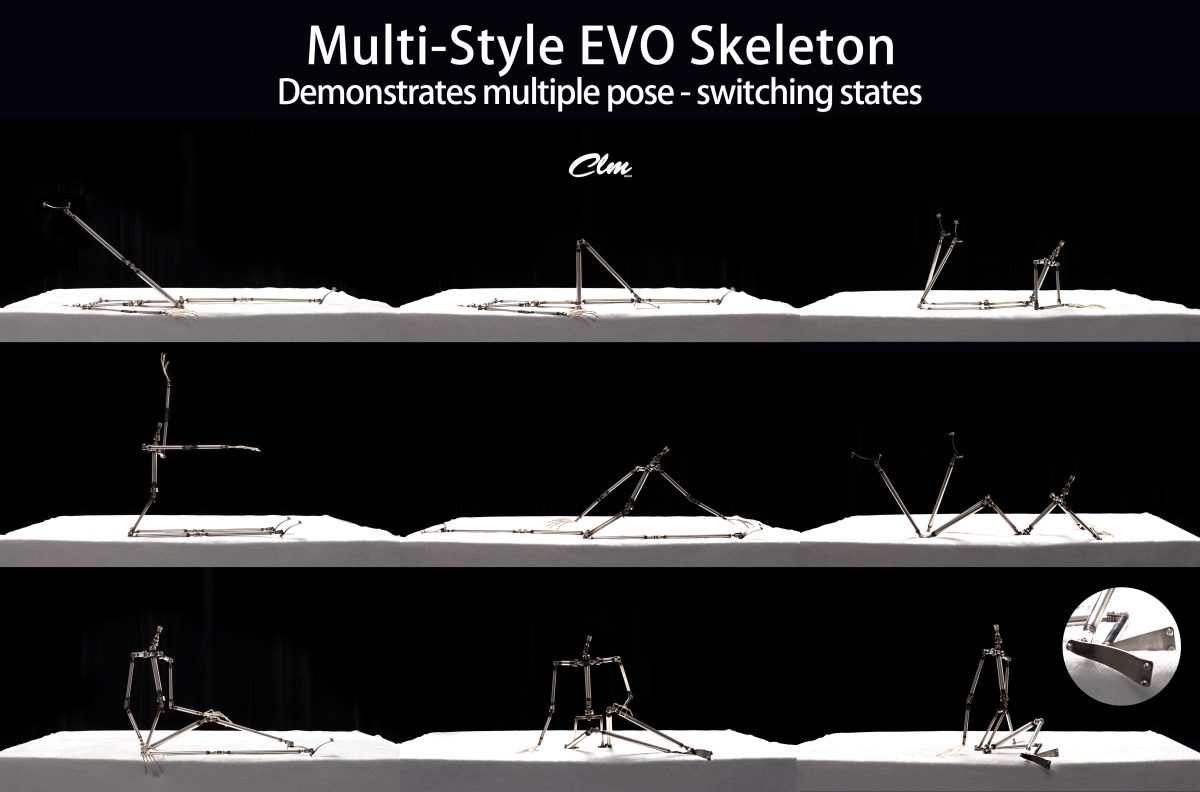

5. External Structure: Surface Layers and Physical Interface
The external structure defines what you see and touch, but it is directly influenced by what exists underneath.
On the head, the outer layer is typically made of silicone or TPE, forming facial features and surface texture. This is combined with implanted elements like hair, eyelashes, and eyebrows, along with painted details that create depth and expression. These components depend entirely on the internal structure for support and positioning.
On the body, the external system consists of an outer material layer supported by a softer internal buffer. In higher-end designs, this often includes a foam-like cushioning layer between the skeleton and the outer skin. This layer reduces pressure from the internal frame, smooths transitions during movement, and helps distribute force more evenly across the surface.
The external surface interacts with the internal structure to create a cohesive experience. If the internal structure is stable but the surface cannot respond naturally, the experience feels disconnected. If the surface is soft but unsupported, it can deform unpredictably, breaking consistency.
6. Integrated Systems: When Functions Enter the Structure
Some dolls include additional functional systems, such as heating elements, sound modules, or motorized components. These features are often seen as upgrades, but from a structural perspective, they introduce new constraints.
These systems require physical space, internal routing, and stable placement within an already limited structure. Once integrated, they interact with both the skeleton and surrounding materials, affecting the doll’s movement, balance, and responsiveness under pressure.
Adding these features means the structure must now accommodate more than just movement and load:
- Internal space becomes more restricted: This is especially true in areas like the torso or head.
- Components must remain stable: If not, they risk shifting or failing over time.
- Additional rigidity or weight: These can impact how naturally the body moves or holds positions.
A well-integrated system balances function and structure, while a poorly integrated one can disrupt the doll’s stability and performance.
7. How Structure Shapes Realism
Structure shapes realism by determining whether movement, form, and interaction remain consistent over time.
Realism is often initially perceived through appearance or touch, but these impressions are sustained by how the doll behaves during movement, repositioning, and repeated use.
When movement is guided smoothly, force is evenly distributed, and the body maintains stable form across different positions, the experience feels continuous. If elements are misaligned—such as when joints resist, surfaces deform unpredictably, or transitions feel abrupt—the sense of realism weakens, even if the materials themselves appear convincing.
This relationship can be summarized as follows:
- Structure defines how movement is generated.
- Movement determines how positions are formed and changed.
- Stability controls whether those positions can be maintained.
- Consistency across these interactions shapes perceived realism.
8. What This Means in Real Use
Understanding structure enhances how a doll is actually used, not just how it is evaluated.
Most issues encountered during use—unnatural positioning, surface stress, instability, or long-term wear—are direct results of how force moves through the structure during everyday use.
In practice, this affects key behaviors like:
- Positioning the doll: Movements should follow joint alignment, avoiding forced angles.
- Handling transitions: Shifting from one pose to another requires controlled movement, not abrupt repositioning.
- Weight distribution: Certain positions place more stress on specific joints, particularly in the shoulders, hips, and knees.
- Doll maintenance: Proper storage and positioning are extensions of how the structure is designed to hold form.
By understanding the structure, these actions become more intuitive, helping reduce physical wear and the effort required to maintain the doll over time.
9. Conclusion: Structure Is What You Actually Interact With
Structure is often hidden, but it defines almost everything you experience. You don’t directly interact with the skeleton, the internal mechanisms, or the layered construction. What you interact with is the result of how all of these elements are combined and coordinated.
Choosing or understanding a doll isn’t about identifying the best individual component; it’s about recognizing how those components work together to deliver the kind of experience you expect. The system can either maintain consistency over time, or gradually lose it. If you need a more comprehensive understanding of the doll’s materials, structure, and realism, we have a more systematic explanation on the Materials & Construction.

Evan Su
Entity: BreathyDoll
Date : April 23, 2026
