
The Physics of Realism: A Scientific Evaluation of Hair Implantation in TPE and Silicone Companion Dolls
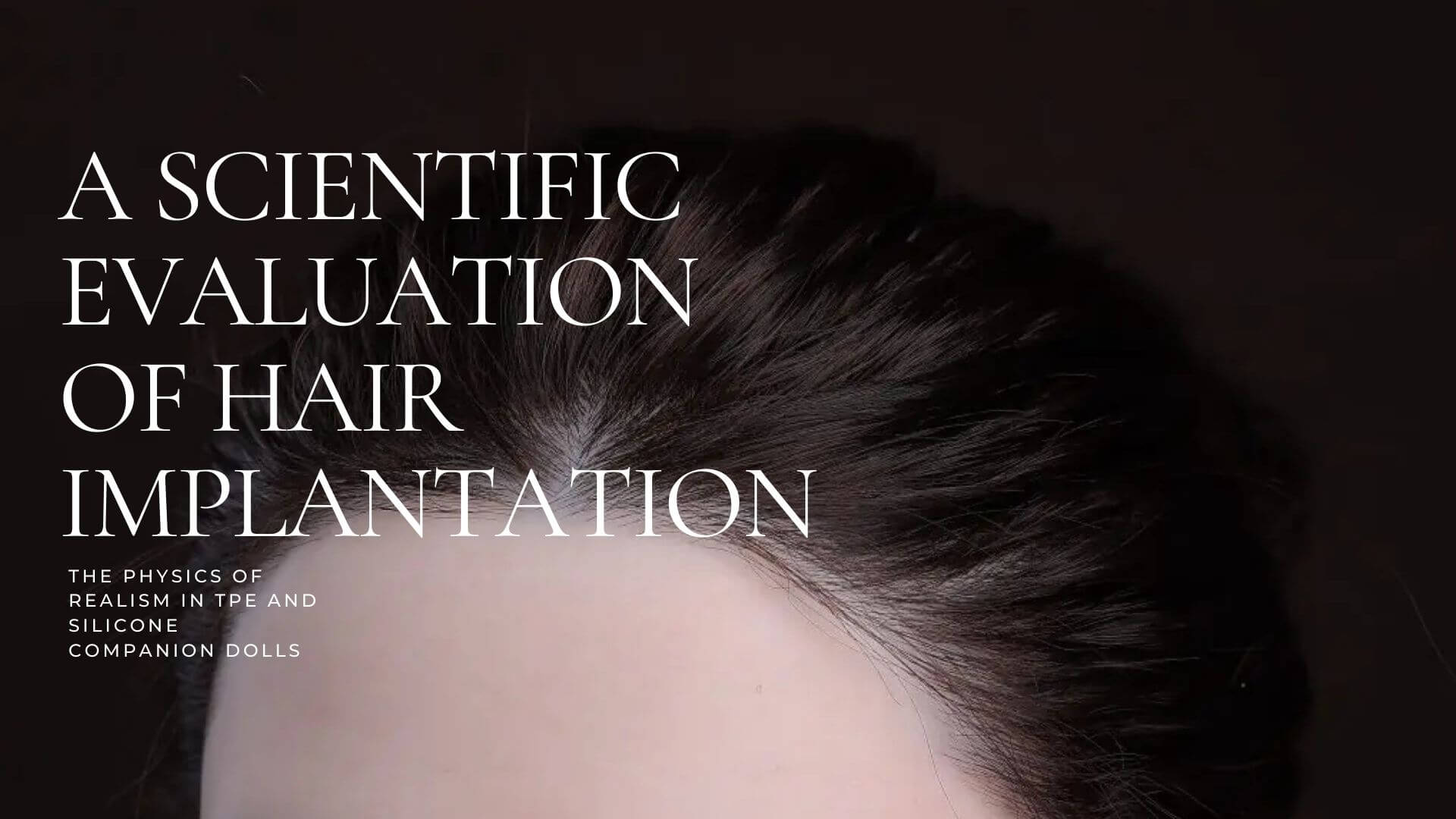
In the evolving landscape of high-end companion dolls, the shift from removable wigs to rooted hair represents more than a cosmetic preference—it reflects a growing demand for biological realism and long-term emotional continuity. At BreathyDoll, hair implantation is not treated as a surface-level upgrade, but as a complex interaction between synthetic polymers, structural fibers, and user behavior. Understanding its feasibility requires viewing the process through the lens of material science rather than marketing promise.
1. The Haptic Imperative: Why Hair Matters
The psychological transition from perceiving an object as a “tool” to experiencing it as a “companion” is often mediated by touch. Research on human–machine perception suggests that mismatches in tactile expectation—particularly involving skin and hair—can disrupt emotional engagement. MacDorman and Ishiguro (2006) observed that the intensity of the “Uncanny Valley” effect decreases when tactile feedback aligns with learned human norms of texture and resistance.
Hair implantation contributes significantly to this alignment. However, its long-term success depends not on appearance alone, but on the mechanical interaction between the implanted fiber and the elastomer substrate—most commonly Thermoplastic Elastomer (TPE) or Silicone.
2. TPE and the Physics of Stress Relaxation
Thermoplastic Elastomers are valued for their softness and skin-like compliance. Yet these same properties impose structural limitations when permanent hair implantation is involved.
Stress Relaxation and Pore Dilation
Unlike chemically cross-linked materials, TPEs consist of physically blended polymer phases. As detailed by Drobny (2014), TPEs exhibit pronounced stress relaxation: when mechanical stress is applied—such as puncturing the surface for hair insertion—the internal restoring force diminishes over time. In practical terms, the micro-pores created during implantation gradually lose their ability to contract, leading to slow but cumulative widening.
Oil Migration and Friction Loss
Another inherent characteristic of TPE is the presence of processing oils that maintain softness. Sengers et al. (2005) demonstrated that these oils are not static; they migrate within the elastomer matrix over time. In the context of a companion doll, this migration effectively lubricates the follicle channel, reducing frictional resistance and increasing the likelihood of gradual hair release—a phenomenon often described by users as chronic shedding.
These behaviors are not defects, but predictable outcomes of the material’s physical design.
3. Silicone: Cross-linked Stability and Mechanical Memory
Silicone elastomers—particularly High-Consistency Rubber (HCR)—operate on a fundamentally different structural principle. Their polymer chains are chemically cross-linked, forming a stable three-dimensional network.
Elastic Recovery and Tear Resistance
Case et al. (2015) showed that cross-linked silicones maintain elastic recovery under repeated deformation far more effectively than non-cross-linked elastomers. When hair is implanted into a silicone scalp, the surrounding material applies consistent radial pressure to the fiber. This “mechanical clamping” effect remains stable over time, largely unaffected by environmental oils or routine handling.
The Role of Shore Hardness
Within silicone variants, higher Shore A hardness—often referred to in the industry as “hard silicone”—correlates with increased cross-link density. This density directly increases the force required to displace an implanted fiber, making the system significantly more resilient to styling stress, washing, and long-term use.
For this reason, BreathyDoll generally recommends silicone-based implantation for collectors seeking durability and minimal maintenance-related anxiety.
Note: This video shows the manual rooted hair implantation process performed on a silicone scalp, illustrating fiber insertion depth, angle control, and material response under real workshop conditions. Video materials provided by our brand – Real Lady.
4. Maintenance as a Technical and Ethical Responsibility
Selecting a companion with implanted hair is not merely a customization choice; it is a commitment to ongoing care informed by material limits.
Mechanical Load Management
Even gentle grooming tools can exceed the localized tear threshold of softened TPE pores. Anti-static brushes that distribute force across multiple fibers reduce localized stress concentration.Thermal Sensitivity
Elevated temperatures temporarily reduce the modulus of elastomers, increasing plastic deformation risk. Cleaning and styling should therefore be performed with lukewarm water to preserve follicle grip.Hygienic Considerations
Rooted hair can transport moisture toward the scalp. Silicone’s non-porous surface allows thorough sanitation without compromising structural integrity, whereas TPE requires more conservative handling to avoid accelerating material fatigue.
Responsible maintenance preserves not only the physical form, but the continuity of the relationship itself.
5. Conclusion: Choosing for the Future
Hair implantation can meaningfully enhance realism, but only when aligned with the physical realities of the underlying material. While TPE offers an exceptionally soft initial tactile experience, its inherent stress relaxation and oil migration place limits on long-term implantation stability. In contrast, hard silicone provides a structurally robust foundation capable of sustaining rooted hair over extended periods with lower maintenance burden.
At BreathyDoll, we encourage owners to move beyond impulse-driven customization and evaluate their environmental readiness, care capacity, and expectations for long-term companionship. Material choice is not simply about feel—it is about sustainability, responsibility, and respect for the relationship being formed.
For a deeper understanding of these materials, please refer to our Materials & Construction pillar page. If you are preparing for your first encounter, our Readiness Guide offers a framework for creating a sustainable environment for your companion.
Scientific Disclaimer: Citations of external academic research are for informational purposes to help owners understand material properties. These references do not constitute an endorsement by the researchers or their institutions of BreathyDoll products.

Evan Su
Entity: BreathyDoll
Date : January 12, 2026
