
How Companion Dolls Are Evolving: AI, Technology, and the Future of Realistic Interaction
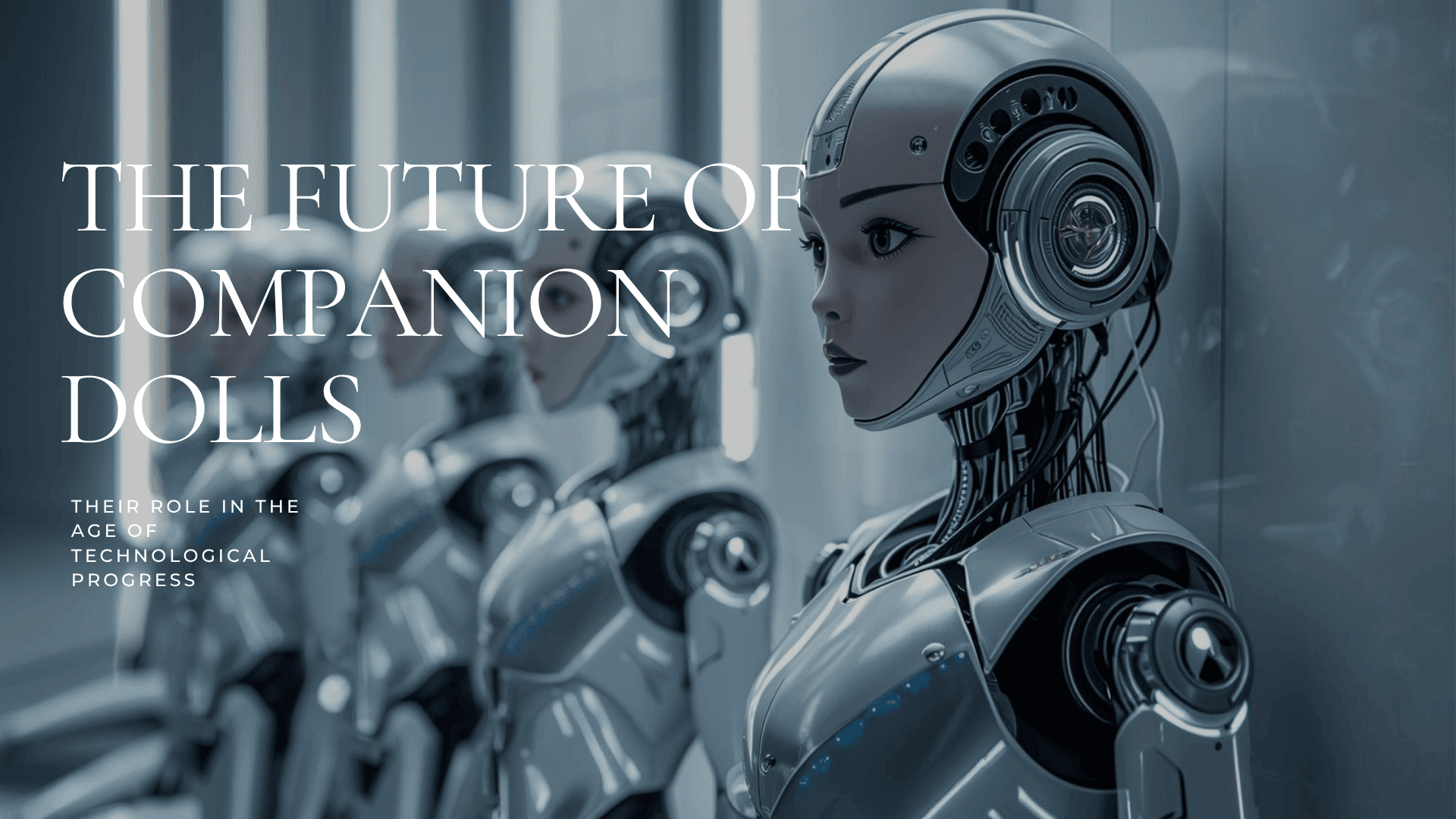
Introduction: From Realism to Evolution
For years, the discussion around companion dolls has focused on a single question:
Do they feel realistic?
Today, that question is no longer enough.
Physical realism—how a doll looks or feels—was once the primary benchmark. But as technology advances, the definition of companionship is shifting beyond surface-level imitation. What matters now is not just whether something feels real in a moment, but whether it can sustain a consistent, interactive experience over time.
To understand where companion dolls are heading, we need to look at how realism, technology, and human perception are evolving together.
The Current Landscape: From Functional Objects to Emerging Companions
The market today is still divided.
Many users continue to purchase what are traditionally called “sex dolls” with a clear focus on physical function. In this segment, cost and practicality often outweigh realism. For these users, a high-end doll may not provide proportional value.
At the same time, a growing group of users is approaching companion dolls differently.
Instead of viewing them as tools, they are beginning to see them as consistent presences in daily life. Expectations are changing:
- not just physical interaction
- but presence, routine, and familiarity
Some users even imagine future systems that could assist with daily tasks or respond intelligently, reflecting a broader shift in how these products are perceived.
This shift marks the transition:
From object → to early-stage companion
Physical Realism: Still the Foundation, but No Longer the Goal
Material and design advancements remain the foundation of the experience.
High-end companion dolls today use medical-grade silicone or advanced TPE to replicate the softness, elasticity, and visual detail of human skin. Features such as:
- subtle surface texture
- pressure response
- detailed finishing (veins, pores)
all contribute to a convincing tactile experience.
Structural design has also improved. Flexible skeletons allow for more natural positioning and movement, enhancing usability and realism.
However, these improvements reveal an important limitation:
Physical realism alone cannot create a complete experience.
For example, heating systems attempt to simulate body temperature, but often struggle with consistency, reliability, or practicality. This highlights a broader truth:
Realism is not defined by isolated features, but by how consistently they work together.
The Missing Layer: Interaction and Responsiveness
What current companion dolls lack is not appearance, but interaction.
A realistic surface can simulate touch, but it cannot:
- respond
- adapt
- engage
This is where the next phase of development is focused.
The future is not about making dolls look more human, but about making them behave in ways that feel responsive and dynamic.
This introduces a new dimension:
From static realism → to interactive realism
The Role of Human Perception
Technology alone does not define the experience.
Human perception plays an equally important role.
Psychological research on anthropomorphism shows that people naturally attribute human-like qualities to non-human entities, especially in conditions of loneliness or social disconnection. When an object provides consistency and presence, the mind begins to interpret it as something more than it is.
This explains why some users describe their experience in ways that go beyond physical interaction.
As one user shared:
“After a long day, I come home and see my doll waiting on the couch. Even knowing it’s not a real person, the presence itself feels real in that moment.”
This does not happen because the object is fully realistic.
It happens because:
perception, repetition, and emotional context reinforce each other
The Next Stage: AI and Adaptive Companionship
The most significant shift will come from integrating artificial intelligence.
Advances in robotics and AI are already demonstrating early capabilities in:
- natural movement
- conversational interaction
- behavioral adaptation
Future companion systems may combine:
- physical realism (materials and structure)
- behavioral realism (AI interaction)
This would allow for:
- personalized responses
- learning from interaction patterns
- emotional cue recognition
At that point, the experience changes fundamentally:
from passive object → to adaptive system
Social Implications: A Changing Definition of Connection
As companion dolls evolve, their role in society becomes more complex.
On one hand, they offer:
- a non-judgmental presence
- support for individuals experiencing loneliness or social anxiety
- a controlled and predictable form of companionship
On the other hand, concerns remain:
- reduced motivation for human interaction
- ethical questions about artificial relationships
- privacy risks related to AI-driven systems
These discussions are not just about technology, but about how humans define connection itself.
Conclusion: Beyond Realism
The future of companion dolls is not simply about making them more realistic.
It is about improving how different elements—material, design, interaction, and consistency—work together to shape the overall experience.
Physical realism was the first step.
Consistency and familiarity followed.
The next stage is interaction and adaptability through AI.
In practical terms, this means the experience will gradually shift from something that only feels real in isolated moments, to something that feels stable and responsive over time.
Understanding this progression helps explain not only where the technology is today, but what users can realistically expect in the near future. If you are interested in future AI companions, you can read related articles at our AI Companion Lab.

John Bennett
Entity: BreathyDoll
Date : November 20, 2025
