
EVO Skeleton: How Structural Design Reflects the Evolution of Companion Dolls
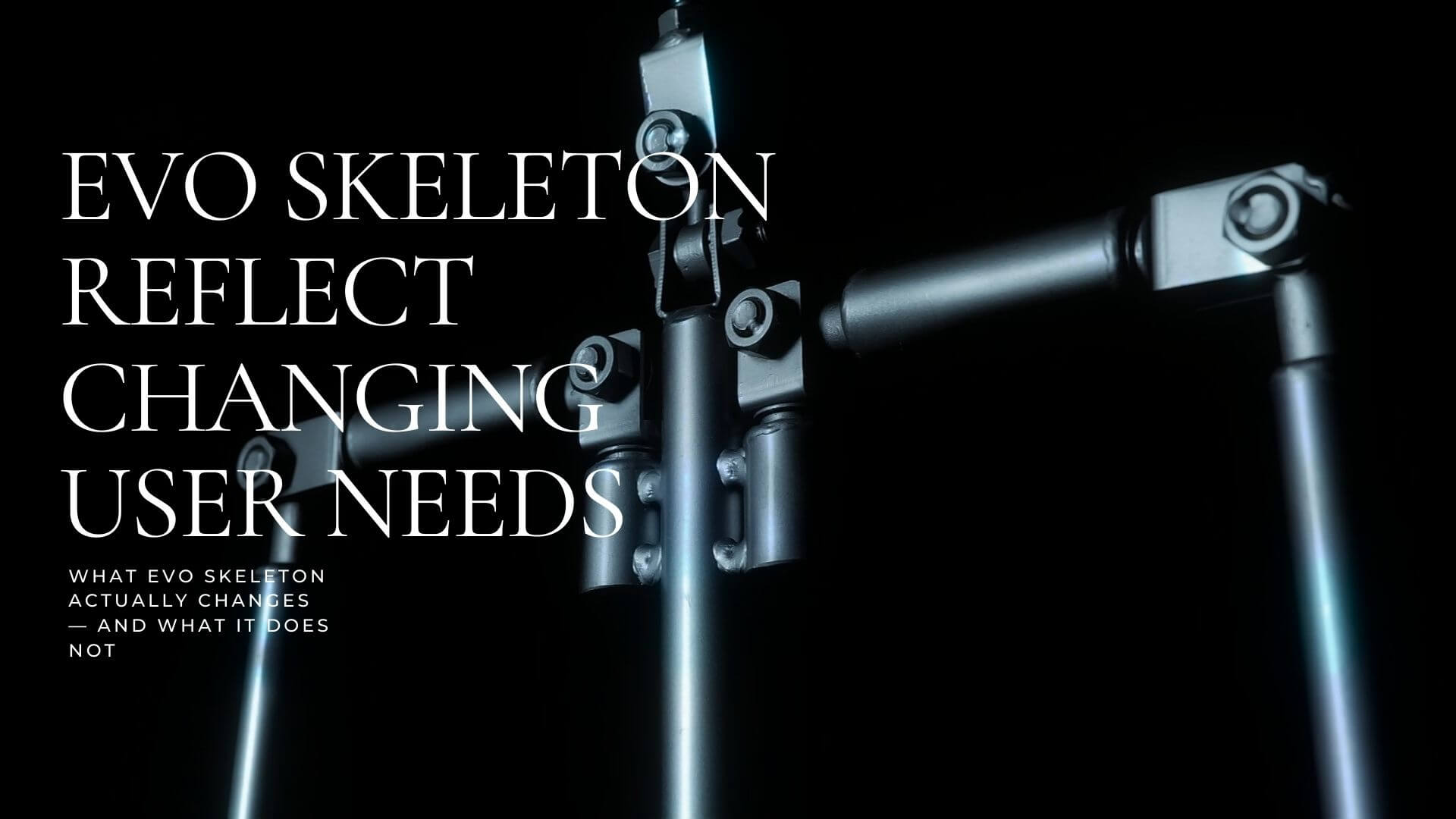
In recent years, EVO Skeleton—often referred to as a shrug-shoulder or advanced shoulder skeleton—has quietly shifted from a premium upgrade to a near-standard configuration across many companion doll manufacturers. This change did not occur because EVO Skeleton dramatically altered core functionality, nor because it introduced a breakthrough mechanical capability.
Instead, its widespread adoption signals something more subtle: a structural response to changing user expectations—expectations that traditional skeleton designs were never intended to address.
This article does not aim to praise EVO Skeleton as a technological marvel. Rather, it examines why this specific structural refinement became necessary, what it actually improves, and what its growing prevalence reveals about how companion dolls are increasingly used, perceived, and integrated into daily life.
EVO Skeleton Solves a Problem That Traditional Skeletons Never Prioritized
Traditional doll skeletons were designed around a clear and narrow objective: functional usability. Their priorities were mechanical stability, load-bearing capacity, and the ability to support a set of predefined poses. Within the historical context of sex dolls as primarily functional products, this approach was both rational and sufficient.
In that framework, the shoulder area was rarely treated as a critical engineering focus. Limited shoulder articulation, stiff shrug angles, or unnatural body positions were acceptable compromises, because they did not meaningfully interfere with the doll’s intended use. Many users would never adjust arm or shoulder poses beyond a few basic positions throughout the doll’s entire lifespan.
If a doll is viewed strictly as a tool—used episodically and stored when not in use—then enhanced shoulder realism is not a necessity. From that perspective, traditional skeleton designs were not “flawed”; they were optimized for a different set of assumptions about user behavior.
EVO Skeleton exists because those assumptions no longer fully hold.
What EVO Skeleton Actually Changes — and What It Does Not
The EVO skeleton does not attempt to replace the fundamental metal framework used in companion dolls, nor does it aim to replicate a fully biological musculoskeletal system. Its purpose is more focused: to refine how key joints—starting with the shoulders—guide movement and distribute stress.
What EVO primarily changes is shoulder articulation. The upgraded shoulder structure improves how the arms connect to the torso, allowing smoother transitions between raised, relaxed, and forward positions. This directly enhances both visual realism and physical stability in upper-body poses, and reflects one of the key factors that affect realism in sex dolls.
From this core improvement, EVO extends its design logic to other stress-sensitive areas. The waist is engineered to allow controlled forward and backward bending, improving posture flow during seated or leaning positions. At the knees, EVO introduces a dual-gear joint structure, enabling more gradual bending and reducing concentrated pressure on the skin—particularly in kneeling poses, where traditional skeletons often rely on simple leg folding.
What EVO does not change is the need for realistic expectations. It does not make extreme poses risk-free, nor does it eliminate mechanical limits inherent to internal skeletons. EVO refines movement quality and stress distribution, but it remains an evolutionary improvement rather than a complete reinvention.
In this sense, EVO skeletons are best understood as a shoulder-led structural evolution, with additional refinements that improve how the body bends, kneels, and transitions—without overstating their scope.
Why “More Human-Like” Became a Structural Requirement
Manufacturers do not increase mechanical complexity without reason. Additional joints, refined articulation paths, and tighter tolerances all raise production costs, assembly difficulty, and long-term quality control demands. EVO Skeleton’s widespread adoption suggests it addresses a real and persistent demand.
That demand is not purely functional.
More users now expect their companion dolls to appear natural not only during specific use scenarios, but also during periods of inactivity: standing in a room, sitting on furniture, or simply being present in a shared space. In these moments, even subtle skeletal limitations—awkward shoulder tension, rigid arm placement, unnatural posture—become immediately noticeable.
What has changed is not the desire for more extreme poses, but the expectation of passive realism. The body should look right even when nothing is happening.
This expectation transforms shoulder articulation from a minor detail into a structural priority.
From Sex Doll to Companion Form: A Structural Transition
The evolution toward EVO Skeleton coincides with a broader, largely unspoken transition in how many users relate to their dolls. While sexual functionality remains relevant, it is no longer the sole—or even dominant—criterion for evaluating realism.
As companion dolls increasingly occupy living environments rather than storage spaces, their bodies are no longer assessed only during moments of use. They are assessed continuously. Visual plausibility, relaxed posture, and subtle anatomical correctness contribute to whether the doll feels like an object being positioned or a presence that naturally belongs.
EVO Skeleton did not create this shift, nor does it define companionship on its own. What it does is acknowledge, at a structural level, that the doll’s body must now support forms of interaction that extend beyond direct functionality.
In this sense, EVO Skeleton represents a physical adaptation to an evolving use context—one that manufacturers may not have fully articulated, but have clearly responded to through design.
Why This Shift Often Goes Unnamed
Interestingly, neither manufacturers nor users consistently frame EVO Skeleton in these terms. Many brands present it simply as an “advanced skeleton,” while users may describe it as making the doll feel “more natural” without further analysis.
This ambiguity exists because the underlying shift is gradual and culturally sensitive. The idea of a companion doll occupying emotional or social space remains difficult to articulate openly, even as structural design increasingly supports that role.
As a result, engineering changes arrive first. Language and conceptual frameworks follow later.
EVO Skeleton’s normalization across the industry suggests that the demand for greater physical plausibility has already solidified—whether or not it has been explicitly acknowledged.
EVO Skeleton as a Material and Structural Indicator, Not a Trend
From a materials and construction perspective, EVO Skeleton should not be viewed as a passing trend or optional upgrade. It is an indicator—a signal that the baseline expectations for realism have shifted at the skeletal level.
This does not mean that every user requires or values EVO Skeleton equally. For some, its impact will remain subtle. But its adoption reflects a collective movement toward bodies designed not just for use, but for presence.
When structural design begins to prioritize how a body rests, exists, and visually communicates humanity, it suggests that the product itself has moved beyond a purely functional category.
EVO Skeleton does not redefine companion dolls. It simply reveals, in steel and joints, what users have already begun to expect.
Closing Thought
Structural changes rarely lead cultural shifts; they respond to them. EVO Skeleton’s rise from niche feature to standard configuration did not happen by accident. It happened because user needs evolved quietly, and engineering followed.
When a skeleton changes, it is often because the role of the body it supports has already changed—whether we are ready to name that shift or not. To better understand how skeletal systems, materials, and internal construction shape long-term realism and usability, you can explore our broader Materials & Construction pillar for a systematic overview of how companion dolls are engineered from the inside out.

John Bennett
Entity: BreathyDoll
Date : January 9, 2026
