
Why Do ROS Heads Feel More Real? Understanding Oral Structure as a System, Not a Feature
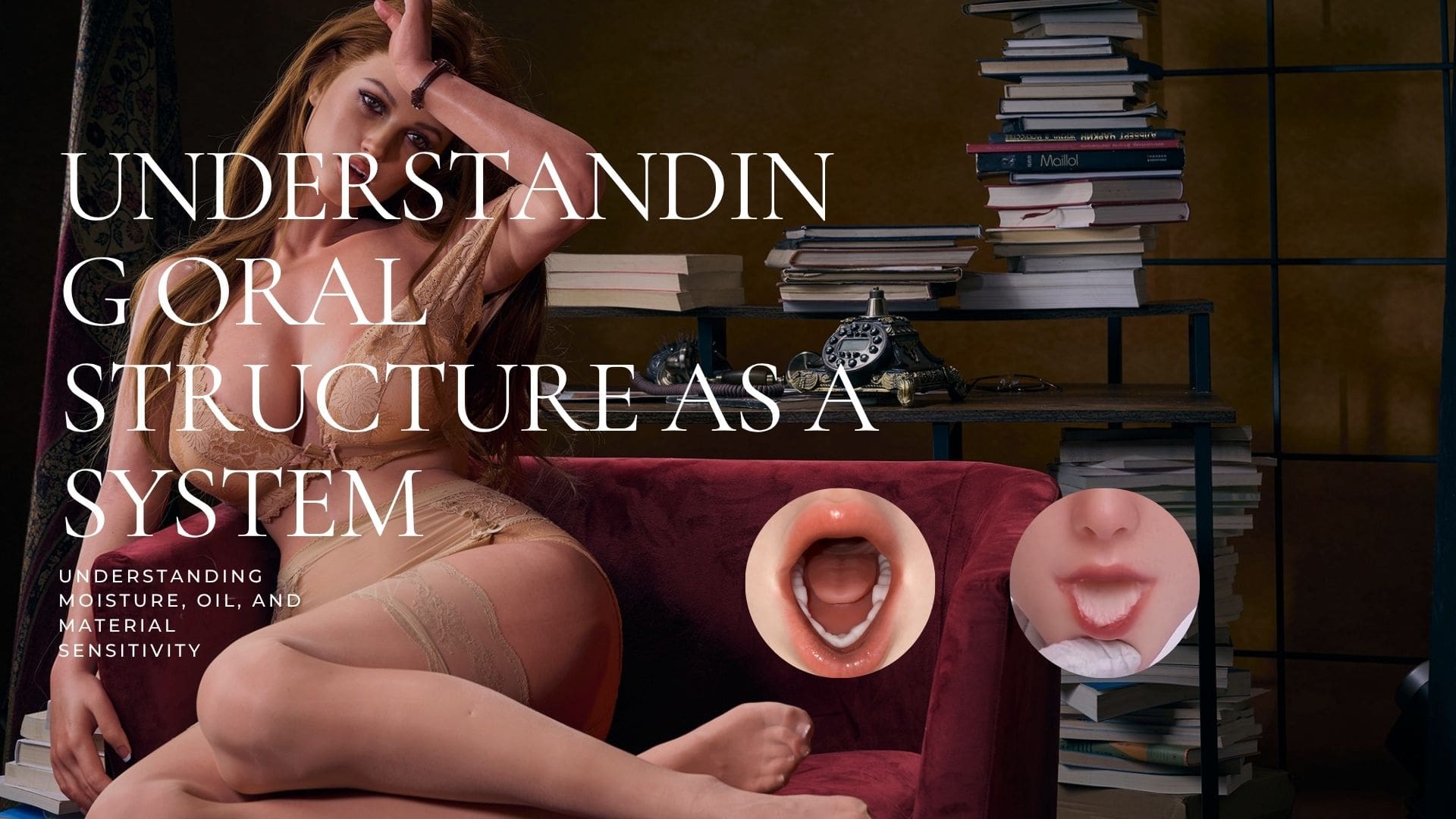
Most people assume that ROS heads feel more realistic for a simple reason: they have more features.
Teeth, a tongue, a movable jaw — on paper, it sounds like a clear upgrade. The logic feels intuitive: the closer something looks to human anatomy, the more real it should feel. But in practice, that assumption often breaks down.
There are many heads that include these elements, yet feel noticeably artificial the moment they are used. So the real question is not just what has been added, but why some structures translate into realism, while others do not.
Because realism is not created by stacking features. It depends on how those elements work together as a system.
In many cases, adding more elements without coordination doesn’t enhance the experience — it exposes the structure behind it.
Why ROS Exists
To understand why ROS designs emerged, it helps to look at how traditional head structures were built — and where they fall short.
Most earlier designs can be broadly divided into two categories: hard head and soft head. These two approaches represent different stages of development, but they share the same underlying limitation.
A hard head is a rigid structure focused entirely on external appearance. It is designed to replicate facial features as closely as possible, but it does not include a functional opening and is not intended for interaction. In this case, realism exists purely at the level of visual imitation.
A soft head introduces flexibility and allows for a mouth opening. This makes interaction possible, but only in a very limited sense. The opening is typically just an entry point, without any internal structure or spatial design behind it.
In practical terms, this means:
- There is no meaningful depth progression
- There is no variation in resistance
- There is no coordinated internal system
The structure extends inward, but it does not evolve — it remains a surface-level simulation.
This creates a fundamental gap. Human perception of realism does not come from appearance alone, nor from the presence of an opening. It comes from how a structure behaves through space and over time — how it maintains continuity during interaction.
Traditional designs, whether hard or soft, do not fully reproduce this. They either stop at the surface, or extend inward without structure.
ROS (Realistic Oral Structure) emerges as a response to this limitation. Instead of treating the mouth as a simple opening, it attempts to build an internal system that introduces spatial interaction and coordinated behavior.
If you’re not familiar with how this concept is defined, you can refer to what is a ROS head for a more detailed explanation of its design logic.
However, even within ROS, results can vary significantly. Because introducing more components is only the first step — whether those components actually work together is what determines if realism is enhanced, or quietly broken.
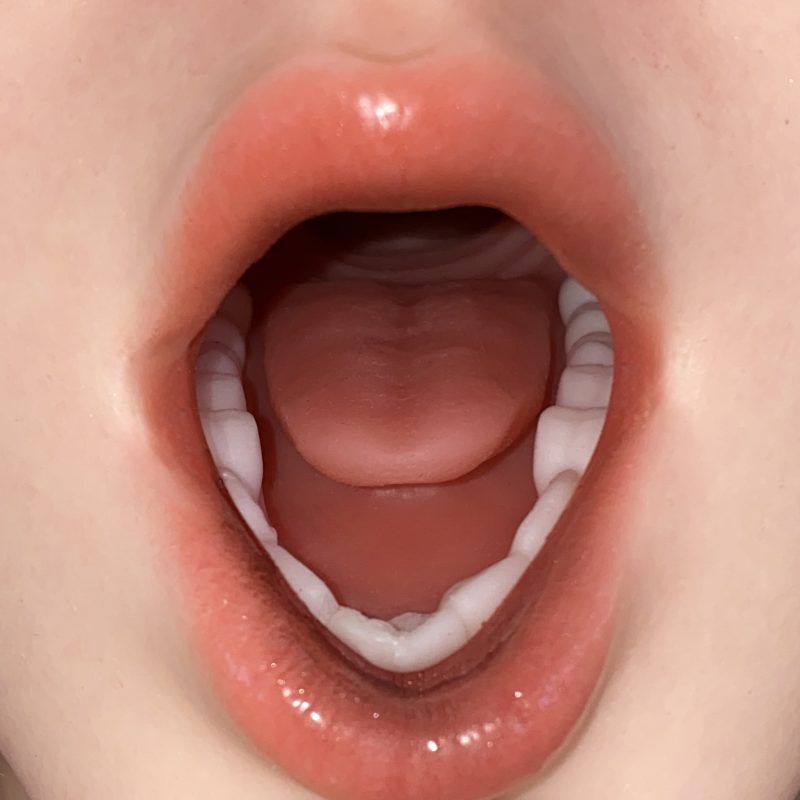
ROS Head
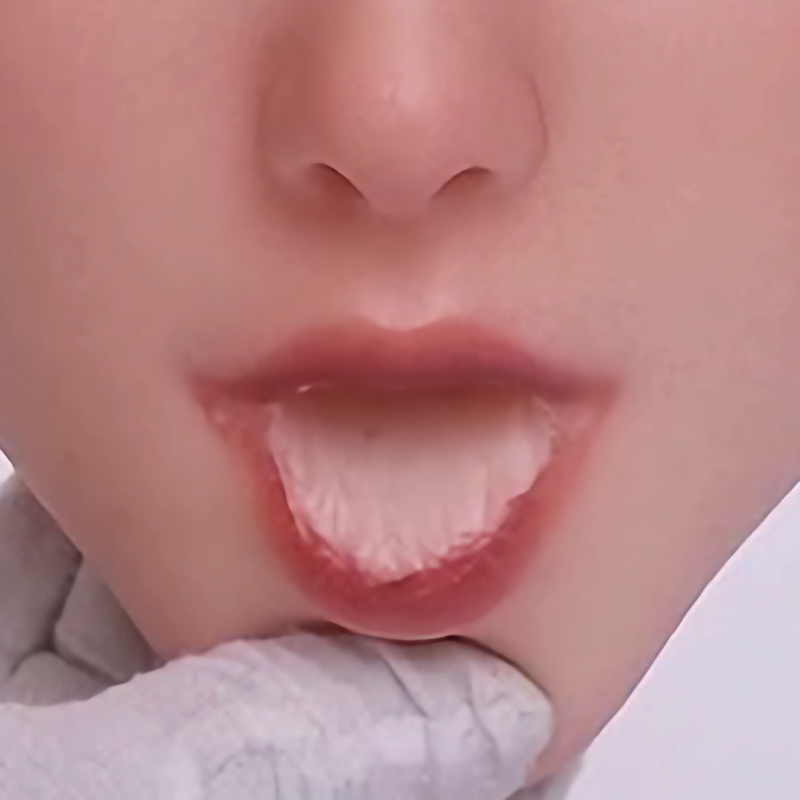
Standard Soft Head
Why ROS Feels More Real: Structure as a Coherent System
If ROS is not defined by the presence of additional features, then what actually makes it feel more real?
The answer lies not in what is added, but in how those elements work together.
It is easy to assume that realism comes from individual components — teeth, a tongue, or a more complex opening. But in practice, these features alone do not determine the experience. Many designs include them, yet still feel artificial once used.
Because realism is not created at the level of parts.
It emerges from how the structure behaves as a whole, especially during opening and closing.
A realistic system is one in which all elements remain consistent under change.
When the mouth opens, internal structures should maintain their relative positions. The tongue, teeth, and internal depth should not shift unnaturally or lose their spatial relationship. At the same time, the external face should remain stable — areas such as the eyes, nose, and overall proportions should not visibly deform.
In many cases, what is described as “ROS” is simply a collection of added elements without full structural integration. The components exist, but they do not behave as a unified system. As a result, the moment the structure changes — even something as simple as opening the mouth — inconsistencies appear.
The tongue may shift out of place.
The teeth may deform.
The face itself may distort in ways that feel unnatural.
These issues are not subtle. They do not gradually reduce realism — they interrupt it.
A more reliable way to understand realism, therefore, is not to look at what features are present, but to observe how the structure holds together:
- Does the face remain stable when the mouth opens?
- Do internal elements stay in place?
- Does the experience feel continuous, rather than fragmented?
If the answer is yes, the structure functions as a system.
If not, the added complexity tends to expose itself.
This is why ROS can feel more real — not because it introduces more features, but because it moves toward structural coherence.
Common Misunderstandings
As ROS becomes more widely discussed, it is often simplified in ways that make it easier to market, but harder to understand. This leads to several common misunderstandings that can distort expectations.
One of the most persistent assumptions is that more structure automatically means more realism. On the surface, this seems reasonable — additional elements like teeth, a tongue, or movable components appear to bring the design closer to human anatomy. But as discussed earlier, realism depends on coordination, not quantity. Without integration, added structures can actually make inconsistencies more visible rather than less.
Another common misconception is that ROS represents a clear, standardized design. In reality, it does not. The term is used broadly across the industry, but there is no fixed definition or consistent implementation. Two products labeled as “ROS” can differ significantly in how their internal systems are constructed and how they behave during use. In this sense, ROS is better understood as a direction of development rather than a finalized standard.
There is also a tendency to equate visual realism with experiential realism. Many designs are optimized for how they appear in images — with carefully crafted details that look convincing at rest. However, as soon as movement is introduced, these visual qualities may not hold. A structure that looks realistic but behaves inconsistently can feel less convincing than a simpler design that maintains continuity.
These misunderstandings often lead users to focus on what is easy to compare — features, materials, visible details — rather than what actually determines the experience: how the structure performs as a whole.
Understanding this distinction does not just clarify what ROS is. It helps explain why similar-looking designs can feel fundamentally different in practice.
Is the Difference Noticeable?
At this point, a more practical question naturally follows: does this difference actually matter in use?
The answer depends less on the design itself, and more on the expectations and sensitivity of the user.
For those who are more experienced, or who pay close attention to detail, the difference can be quite noticeable. When interaction is prolonged or repeated over time, inconsistencies in movement, structure, or feedback become easier to detect. In these cases, a system that maintains coherence tends to feel more natural, not because it is more complex, but because it avoids disruption.
On the other hand, for first-time users or those with lower expectations of structural realism, the distinction may not be as immediately apparent. If the primary focus is on appearance or basic functionality, then the added complexity of a ROS design does not always translate into a clearly improved experience.
This is why ROS should not be seen as a universal upgrade.
It does not automatically make a design “better,” nor is it necessary for every user. Instead, it represents a different level of structural approach — one that becomes more relevant when the goal shifts from simple interaction to a more continuous and stable experience.
In that sense, the question is not whether ROS is worth it in general, but whether it aligns with what the user is actually looking for.
For some, the difference is subtle.
For others, it defines the entire experience.
Conclusion
By this point, the distinction should be clear.
What makes a ROS head feel more realistic is not the presence of additional features, but the way those features work together as a system. Realism is not built through accumulation, but through consistency — the ability of a structure to maintain continuity as it moves and responds.
This is also why two designs with similar components can produce entirely different experiences. One may appear advanced, but feel fragmented in use. Another may seem simpler, yet feel more natural because its structure remains stable and coherent throughout interaction.
In this sense, realism is not something that can be reduced to a checklist. It is not defined by whether a design includes teeth, a tongue, or a movable jaw. It is defined by whether those elements support a continuous experience — or interrupt it.
This perspective also changes how ROS should be understood.
Rather than a fixed standard, it is better seen as an evolving approach — one that attempts to move beyond surface imitation toward structural integration. If you want a deeper understanding of how this concept developed, you can revisit what is a ROS head for a broader explanation of its design philosophy. If you would like to learn more about the experience and realism of companion dolls, please visit pillar page Materials & Construction, which can help you understand how sex doll materials, structure, and realism work as a single system.

BreathyDoll Team
Entity: BreathyDoll
Date : April 11, 2026
