
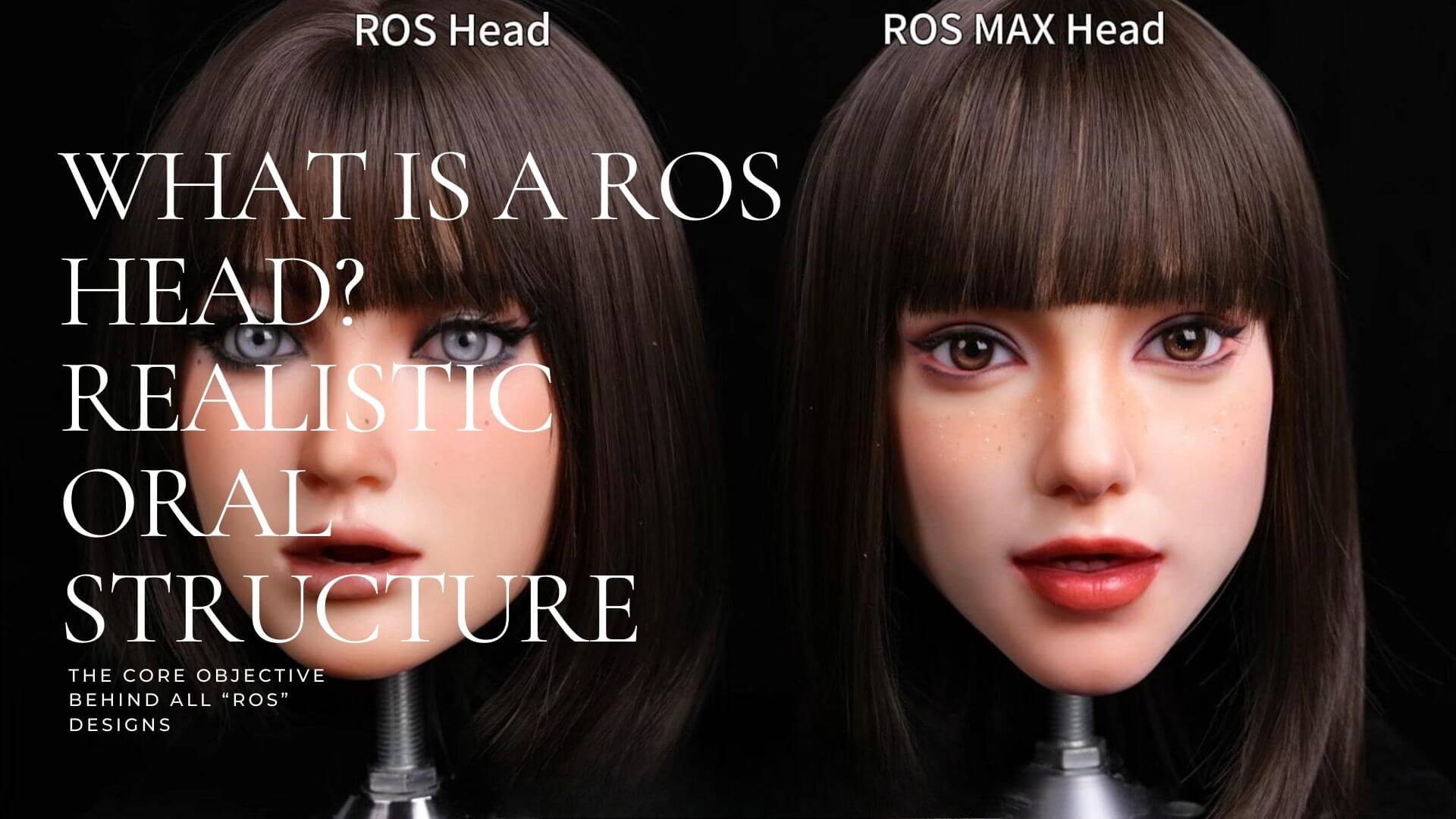
What Is a ROS Head? Understanding Realistic Oral Structure as an Evolving Design Concept
Introduction: Why “ROS” Often Creates More Confusion Than Clarity
In today’s companion doll market, ROS (Realistic Oral Structure) is one of the most frequently used—and least consistently defined—terms. Different manufacturers use it to describe very different internal designs, while users are left comparing labels rather than understanding structures.
This confusion does not stem from user misunderstanding. It stems from a deeper issue:
ROS is not a fixed specification, but a moving reference point in an evolving design trajectory.
This article does not treat ROS or ROS MAX as final answers. Instead, it explains what these terms attempt to describe, why multiple interpretations exist, and how to understand them within the broader pursuit of realistic oral structure.
The Core Objective Behind All “ROS” Designs
Regardless of branding or terminology, all so-called ROS designs share a single underlying goal:
To move the internal structure of a silicone doll head closer to the proportions, mechanics, and visual logic of a real human mouth.
From the earliest designs to the most recent refinements, the direction has always been the same. What changes is how far along that path a given design has progressed.
Seen from this perspective, ROS is not a category defined by one feature. It is a stage within an ongoing process.
From Basic Openings to Structured Oral Design
Historically, many silicone doll heads began with extremely simple internal designs:
- A single usable opening
- No defined teeth
- No tongue structure
- No articulated jaw
These designs prioritized basic functionality rather than anatomical realism.
As expectations evolved, manufacturers began introducing internal elements that more closely resembled human oral anatomy. This gradual shift—not a single invention—gave rise to what the industry now broadly refers to as ROS.
Standard Soft Silicone Heads: The Starting Point
A standard soft silicone head represents the baseline of structural flexibility. The material allows limited deformation, but internal components—if present—are simplified.
In these designs:
- The mouth may open slightly, but without a defined internal architecture
- Teeth and tongue, if included, are often static or visually oriented
- Jaw movement is limited or assisted rather than structurally articulated
This stage establishes material softness, but not yet true internal realism. Here, if you want to know the difference between soft and hard silicone head, you can check out the article “Hard Silicone Head vs. Soft Silicone Head: Which Doll Head is Right for You? ” for more details.
ROS: Introducing Intentional Oral Structure
A ROS head marks the point where internal oral design becomes intentional rather than incidental.
Instead of treating the mouth as a single opening, ROS designs introduce:
- A more realistic spatial relationship between lips, teeth, and tongue
- Improved jaw mechanics that allow natural opening
- Internal components designed to function together as a system
At this stage, realism is no longer purely visual. It begins to reflect structural logic.
However, it is important to recognize that ROS does not represent a universal standard. Different manufacturers implement this concept with varying depth, precision, and proportional accuracy.
ROS MAX: Refinement Within the Same Trajectory
ROS MAX should not be understood as a new category, but as a refined interpretation of the ROS objective.
Rather than redefining realism, ROS MAX focuses on engineering improvements that stabilize and balance existing structures. These refinements align with what makes a doll feel real, where small adjustments in proportion, structure, and movement can influence how the overall design is perceived.
These improvements include:
- Reinforcing eye socket areas to reduce deformation during mouth opening
- Refining lip thickness to achieve more natural proportions
- Adjusting teeth and tongue positioning for realistic exposure
- Enhancing jaw structure to allow direct manual opening
- Introducing subtle tongue movement during jaw articulation
These changes do not alter the destination. They improve how the design behaves as it moves closer to it.
Why So Many Definitions Exist in the Market
The companion doll industry is still developing formal standards for internal structure terminology. As a result:
- Multiple designs are marketed under the same term
- Similar structures are described using different names
- Users encounter overlapping claims without clear reference points
This is not necessarily a sign of poor intent, but of a market evolving faster than its vocabulary.
ROS, ROS MAX, and future terms all attempt to describe progress along the same axis: increasing anatomical realism.
Why ROS Is Not the Final Form of Realistic Oral Structure
It would be misleading to treat ROS—or even ROS MAX—as the ultimate realization of a realistic mouth.
Materials improve.
Structural understanding deepens.
Manufacturing techniques evolve.
As these advances occur, it is inevitable that designs will emerge that surpass today’s ROS MAX implementations. When that happens, new terms will appear—not because ROS was wrong, but because the reference point has shifted forward.
Understanding ROS as a phase rather than a finish line allows users to evaluate designs rationally, without becoming locked into terminology.
A Structural, Not Terminological, Perspective
The most reliable way to understand oral structure in silicone heads is not to ask what it is called, but:
- How closely does it reflect real anatomical relationships?
- How stable is the structure during movement?
- How coherent is the internal system as a whole?
These questions remain valid regardless of how future designs are named.
This structural perspective aligns naturally with broader discussions of Materials and Construction, as well as practical considerations within a companion doll shopping guide—where understanding design intent matters more than labels.
Conclusion: Understanding ROS Through Evolution, Not Absolutes
ROS is best understood as a working concept, not a fixed definition. It represents a meaningful step toward realistic oral structure, while ROS MAX reflects further refinement within the same pursuit.
Neither is final. Both are part of a longer trajectory aimed at narrowing the gap between silicone construction and human anatomy.
By viewing ROS through this evolutionary lens, users can move beyond terminology confusion and focus instead on what truly matters:
how close a given design comes to the reality it seeks to emulate.
Explore All Realistic Sex Dolls Now









BreathyDoll Team
Entity: BreathyDoll
Date : January 3, 2026
